Are Bernedoodles Hypoallergenic?
No dog is 100% hypoallergenic, and bernedoodles are no exception. But most bernedoodles are a strong option for allergy sufferers, because low-shedding, curly, furnished coats produce and spread far less dander than the average dog. How well any specific bernedoodle works for you comes down to three things: its generation, its coat, and how sensitive you are.
Key Takeaways
If you’ve spent years turning down dogs because they leave you sneezing, itchy-eyed, or reaching for an inhaler, the bernedoodle probably landed on your list with the word “hypoallergenic” already attached to it. It’s the single most common reason people start researching the breed, and it’s the question that brings most readers to this page.
The honest answer up front: no dog is truly hypoallergenic, bernedoodles included.
What’s true is that most bernedoodles are lower-allergen than most breeds, and for a lot of people with mild to moderate dog allergies, that difference is enough to share a home with one comfortably. The catch is that “most” isn’t “all,” and the range runs from dogs that trigger almost nothing to dogs that will have you congested by dinner.
This guide covers what actually causes dog allergies, which bernedoodles give you the best odds, and how to test your own reaction before any money changes hands. For the full breed picture, start with our complete bernedoodle guide.

What does “hypoallergenic” actually mean?
Hypoallergenic means a low likelihood of causing an allergic reaction, not zero likelihood. The word describes reduced risk, and it was never a promise, even when a breeder website presents it like one.
You’ll also see “allergy-friendly” used alongside it, and the two aren’t quite the same. Some sources treat allergy-friendly as the milder tier (fine for people with light allergies) and reserve hypoallergenic for dogs unlikely to bother someone with a stronger allergy. It’s a useful distinction to keep in mind while you read breeder listings.
The honest takeaway is that both words describe a lower allergen load, not the absence of one. No dog, bernedoodle or otherwise, gets you to zero.
What actually causes dog allergies?
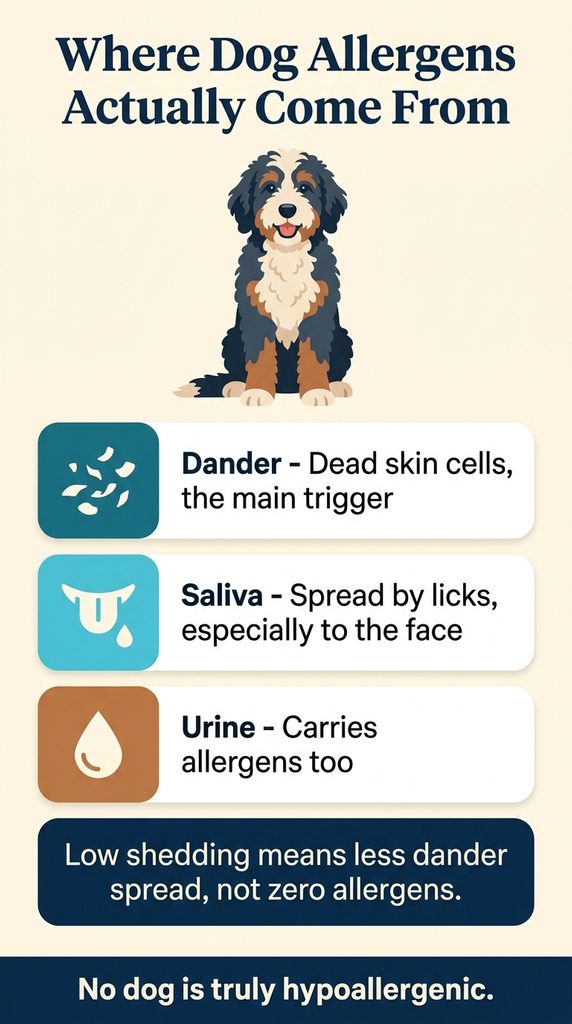
Dog allergies are a reaction to proteins in a dog’s dander, saliva, and urine, not to the hair itself. The main culprit is a protein called Can f 1, which shows up in dander (dead skin flakes) and saliva. Your immune system reads that protein as a threat and mounts the response you know as itching, sneezing, watery eyes, or worse.
Hair matters, but only as a delivery system. A shedding dog scatters hair carrying dander across your floors, furniture, and clothes, which spreads the allergen through the house. A low-shedding dog keeps more of that dander trapped in the coat until it’s brushed or bathed out. That’s the actual mechanism behind the whole “low-allergen” reputation: less shedding means less dander in circulation, which for many people means fewer symptoms.
It also explains why a dog that barely sheds can still get to you. Saliva and urine carry allergens no matter how tightly curled the coat is, which is why a lick on the wrist or a face full of puppy kisses can spark a reaction even from a dog you otherwise live with fine.
So are bernedoodles a good choice if you have allergies?
For mild to moderate dog allergies, a well-chosen bernedoodle works out for a lot of people. For severe allergies or asthma, it’s a maybe, and no coat type turns that maybe into a yes.
People who tend to do well are those with lighter sensitivities who are willing to keep up with grooming and cleaning. The lower dander load does real work, and owners in this camp often report managing with nothing more than their usual seasonal allergy routine. People who should slow down are those with strong reactions, anyone with allergy-driven asthma, and households where a reaction would be more than an inconvenience.
There’s a practical angle worth naming here too. A lower-shedding, lower-dander dog matters more in some homes than others. Young kids spend a lot of time on the floor where dander settles, and older adults often have more sensitive airways. If that’s your household, the coat you choose isn’t just a grooming decision.
One tradeoff comes with the territory. The same low-shedding coat that keeps dander out of your air is also the coat that mats without regular brushing. Grooming isn’t only about looks for allergy households. It’s part of how you keep the allergen load down, which means the grooming schedule is part of the deal, not an optional extra.
Which bernedoodle generation is the most hypoallergenic?
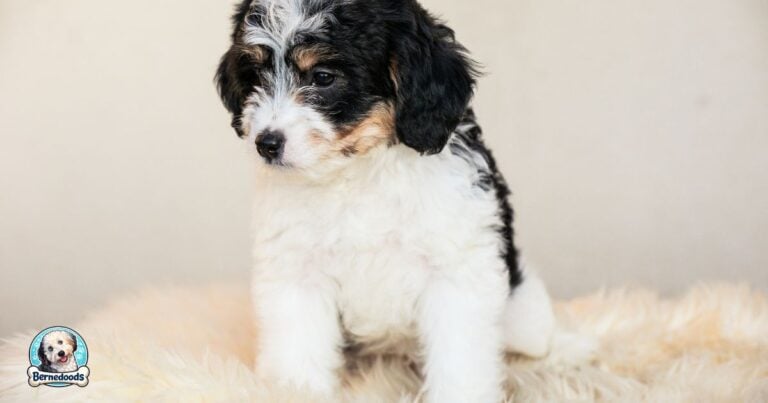
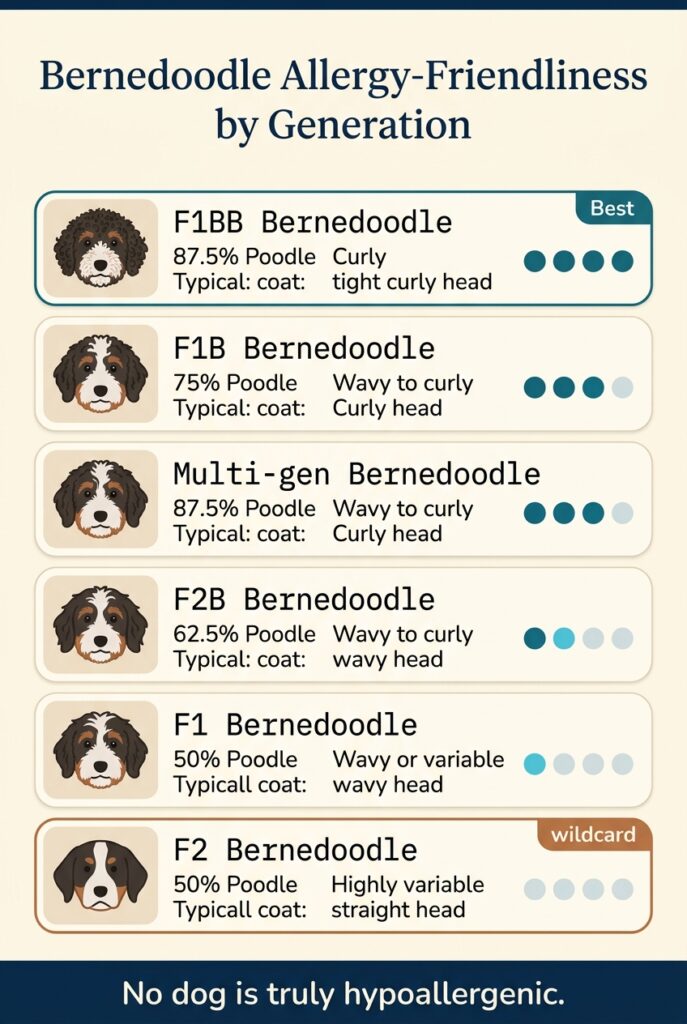
More Poodle usually means a curlier coat, less shedding, and less dander spread, so the higher-Poodle generations are your safest bet. F1B, F1BB, and multi-gen bernedoodles are the most allergy-friendly. F1 and especially F2 are less predictable. None of them are guaranteed to be allergen-free.
Here’s how the generations compare on the traits that matter for allergies. Generation predicts coat probability, not certainty, so read this as odds rather than promises.
| Generation | Poodle % | Typical coat | Shedding | Allergy odds |
|---|---|---|---|---|
| F1 | 50% | Wavy, sometimes straight or curly | Low to moderate | Mild allergies |
| F1B | 75% | Wavy to curly | Very low | Moderate allergies |
| F1BB | 87.5% | Curly | Minimal | Best option |
| F2 | 50% | Highly variable | Varies widely | Unpredictable |
| F2B | 62.5% | Wavy to curly | Low to very low | Moderate allergies |
| Multi-gen | Usually high | Wavy to curly | Low | Moderate to best |
A few of these deserve a direct answer, since people search them one at a time.
- Are F1 bernedoodles hypoallergenic? Sometimes, but they’re the least predictable. An F1 is a 50/50 cross, so the coat can land anywhere from Poodle-curly to Bernese-straight, and the allergy outcome swings with it. Fine for mild allergies, risky if you react strongly. Remember that no F1 is truly non-allergenic regardless of how the coat turns out.
- Are F1B bernedoodles hypoallergenic? The F1B is the generation most owners with allergies recommend. At roughly 75% Poodle, it usually carries a curlier, lower-shedding coat, which keeps more dander out of your home. It’s a strong option, not a guarantee, and the occasional F1B still surprises its owner with a straighter coat that sheds more than expected.
- Are F1BB bernedoodles hypoallergenic? The F1BB is the closest bernedoodles come to non-shedding, which makes it the safest choice for allergy-sensitive homes. Nearly all of them have tight, curly coats and shed minimally. This is the tradeoff. Some of the Bernese look and temperament fade at this Poodle percentage, and grooming demands are the highest of any generation. Even here, “minimal shedding” isn’t “no allergens.”
- Are multi-gen bernedoodles hypoallergenic? Generally yes, on par with the F1B. Multi-gen dogs (a doodle bred to a doodle) usually carry a high Poodle percentage, and owners often report them shedding as little as an F1B. As always, the coat is the thing to check, not the label.
- Are all bernedoodles hypoallergenic? No. Straight-coated and unfurnished dogs shed more and spread more dander no matter what generation they came from, and no bernedoodle is fully allergen-free. That’s why the coat and furnishing status matter more than the generation on the paperwork. For the full breakdown of what each cross means, see our guide to bernedoodle generations [LINK: /bernedoodle-generations-explained], and for the shedding specifics, our complete shedding guide [LINK: /do-bernedoodles-shed].
How does coat type affect allergies?
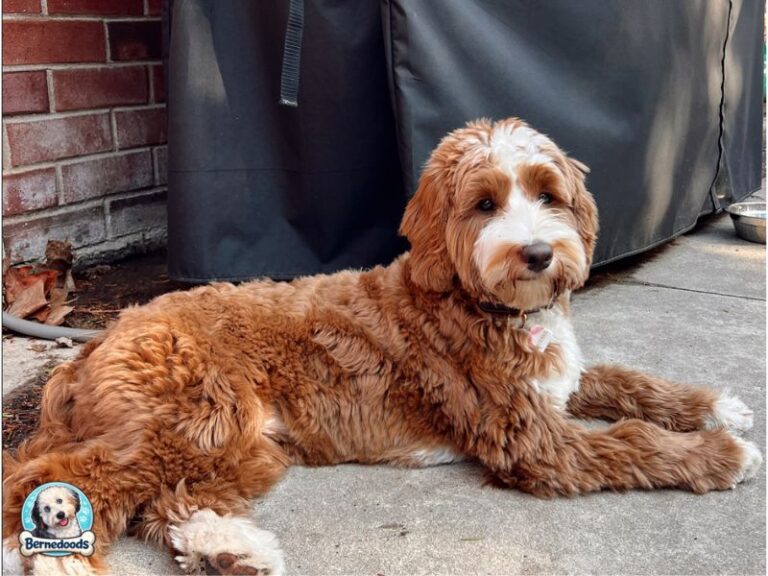
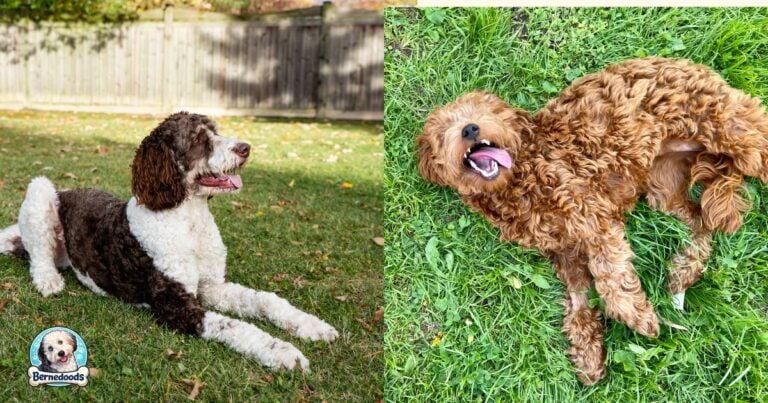
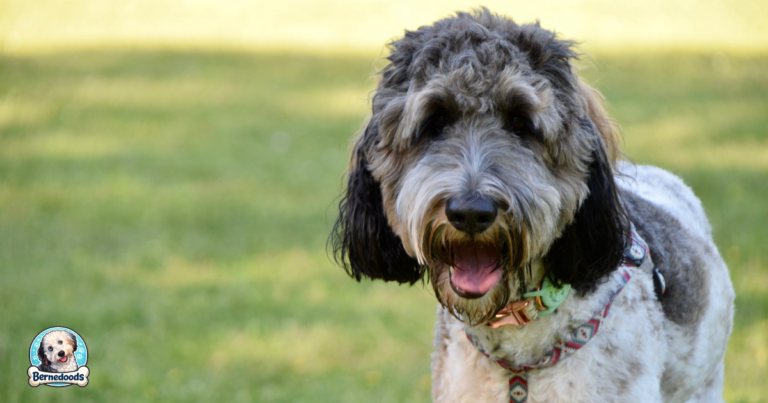
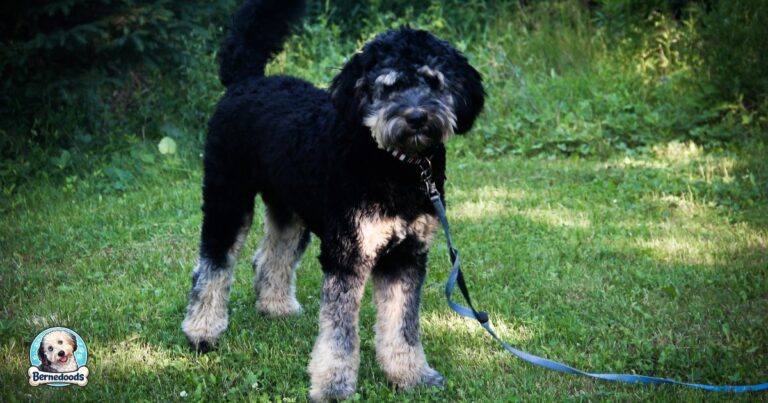
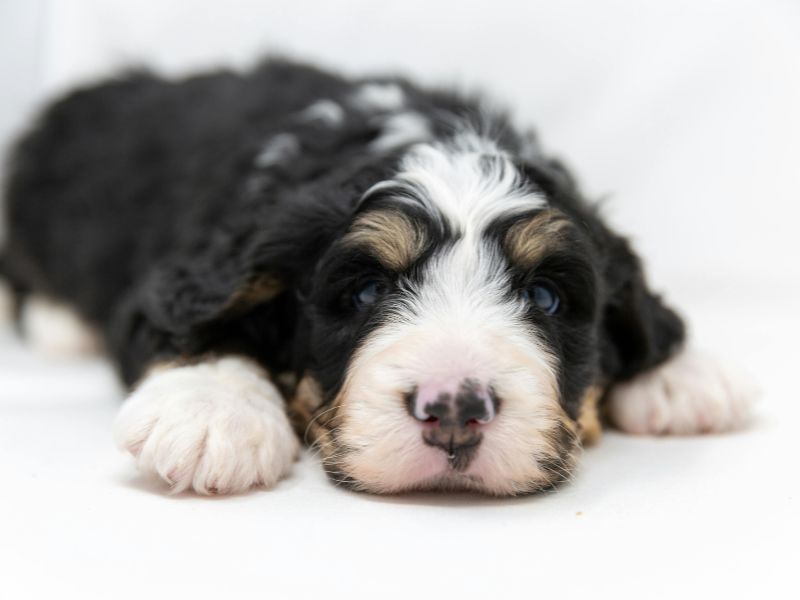
Curly coats are the most allergy-friendly, wavy coats sit in the middle, and straight coats are the worst choice for allergy sufferers. The tighter the curl, the more loose hair and dander the coat catches before it reaches your furniture.
That’s the standard advice, and it’s mostly right, but it deserves one honest complication. Not everyone in the breeding world agrees that curl is the deciding factor.
Some breeders report wavy multi-gen dogs that are just as low-allergen as their curly littermates. The way to square that: curl is a proxy for low shedding, not the cause of it. What actually drives your allergen exposure is how much a dog sheds and how much dander it puts into the air. Curl usually tracks with less shedding, which is why it’s a decent shortcut, but it’s the shedding and the furnishing (more on that next) that you’re really after.
The coat that helps your allergies is also the one that demands the most upkeep. Curly coats mat quickly, which means brushing every day or close to it, plus professional grooming every six to eight weeks. If you want the low-allergen coat, the grooming schedule comes with it.
Why the furnishing gene matters more than curl
Furnished bernedoodles almost always shed less and spread less dander than unfurnished ones, regardless of generation, which makes furnishing one of the most overlooked allergy variables. Furnishings are the mustache and eyebrows that give doodles their bearded, teddy-bear face. An unfurnished bernedoodle has a smoother, more Bernese-looking muzzle.
The part that matters for your allergies is that furnishings aren’t only cosmetic. Furnished dogs tend to hold onto loose hair and dander the way a curly coat does, while unfurnished dogs shed more even when the rest of the coat looks doodle-ish. An unfurnished F1B can shed more than you’d ever expect from the generation label alone.
The good news is you don’t have to guess. The furnishing gene sits at what’s called the IC locus, and it’s testable with a simple DNA test. Any breeder telling you their puppies are low-shedding should be able to tell you the furnishing status of the parents and the litter. If they can’t, that’s worth noting. For the full explanation of furnished versus unfurnished coats, see our dedicated guide [LINK: /furnished-vs-unfurnished-bernedoodles].
Are mini bernedoodles more hypoallergenic than standards?
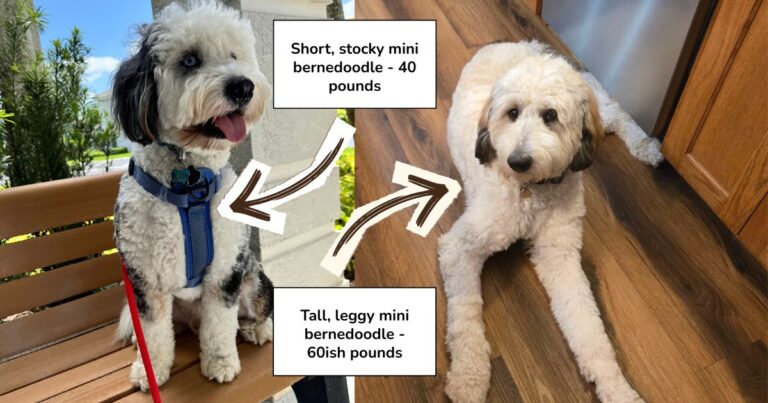
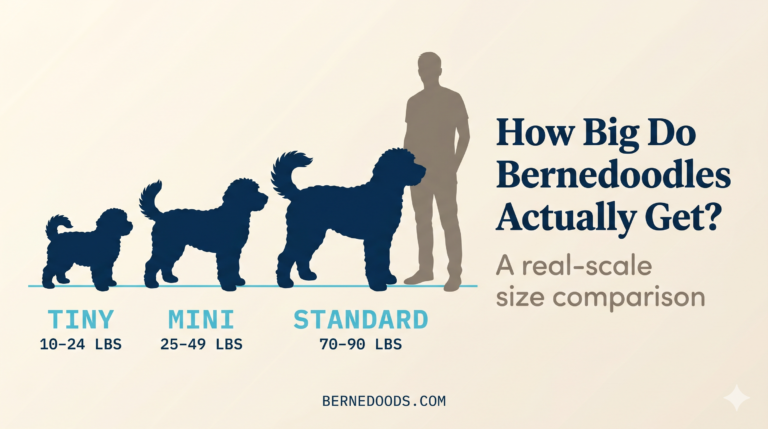
A little, but not for the reason most people assume. A smaller dog carries less total dander simply because there’s less dog, so the overall allergen load in the home can be marginally lighter.
Size doesn’t change the coat rules, though. A mini follows the same logic as a standard: curly and furnished beats straight and unfurnished, and a higher Poodle percentage tips the odds in your favor.
Coat type and generation matter far more than size here. A curly, furnished mini F1B is a better allergy bet than a straight-coated standard F1, and vice versa. For the size-specific details, see our guide on whether mini bernedoodles shed [LINK: /do-mini-bernedoodles-shed].
Why am I still allergic to my bernedoodle?
Because low-allergen was never no-allergen, and usually one of a few specific things is going on. The most common: the coat came in straighter or less furnished than the breeder expected, so it sheds and spreads more dander than a curly, furnished dog would.
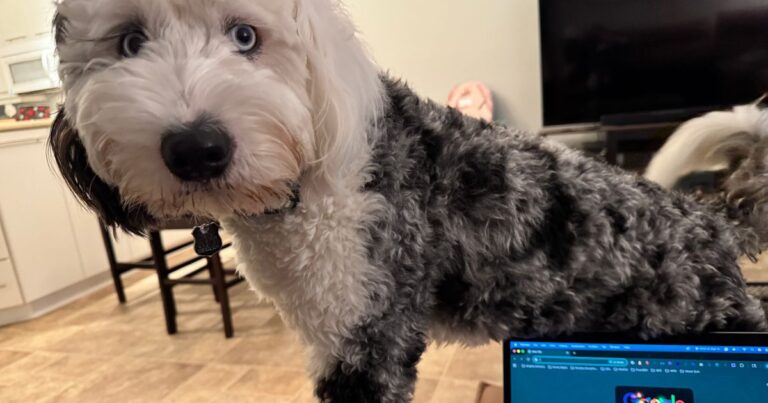
There’s also the puppy-coat factor. A bernedoodle’s coat often changes between roughly eight weeks and eighteen months as the adult coat comes in. Some owners describe a rough allergy patch early on that eased once the puppy blew its coat and the curlier adult coat settled in. It can also go the other way, so the coat you feel at eight weeks isn’t a lock on the coat you’ll live with.
Allergen levels genuinely vary from dog to dog, even between two dogs with the same coat type, and reactions are personal on top of that. Two people in the same house can respond differently to the same dog. Owner communities are full of people who live comfortably with their own curly bernedoodle but still react to a friend’s wavier one.
A gentler pattern shows up in those threads too. Some owners report that a manageable early reaction faded over the first year, apparently as their body adjusted to the specific dog. It’s worth knowing, but hold it loosely. Repeated exposure eases symptoms for some people and does nothing for others, and it’s not something to count on before you bring a dog home. If your allergies are significant, the next two sections matter more than any hopeful anecdote.
How to reduce allergens if you live with a bernedoodle
You can cut your allergen exposure meaningfully with a mix of grooming, cleaning, and a few household boundaries. None of it is a cure, but stacked together it’s often the difference between coping and struggling.
On the dog, keep the coat and the dander under control. Brush regularly, which for a curly coat means most days. Book professional grooming every six to eight weeks. Bathe the dog on a sensible schedule, since dander and saliva proteins build up on the coat between baths. One telling sign from owners: some notice their symptoms creep back right when the dog is overdue for a wash. Don’t overdo it either, because constant bathing dries the skin and can make dander worse.
In the home, go after the allergens that settle and circulate. Vacuum two or three times a week, ideally with a HEPA filter. Run an air purifier in the rooms where you spend the most time, the bedroom especially. Wash the dog’s bedding often, and consider washable covers on the furniture the dog uses.
A few boundaries help more than their effort suggests. Keeping the dog out of your bedroom gives you eight hours a day in a lower-allergen space. Washing your hands after handling the dog keeps saliva proteins off your face. And this is the one owners with allergies mention most: skip the face licks. Saliva is a primary allergen, so a dog that’s fine to pet can still set off your eyes if it gets you on the face or neck. Plenty of allergic owners live happily with their dogs by simply steering the kisses elsewhere. For everything grooming, see our full grooming guide.
How to test your allergies before you commit
The most reliable test is time with the actual dog, or its parents, before you bring anyone home. Coat and allergen load vary too much to trust a label sight unseen, so real exposure beats any promise on a website.
Start by confirming what you’re actually allergic to. Some people who think they react to dogs are really reacting to pollen, dust, or dander the coat picked up outdoors. An allergist can run a scratch or blood test and tell you whether dogs are the real trigger, which is worth knowing before you spend thousands on a puppy. If your allergies are serious, that conversation should come first.
Then spend meaningful time around the right dogs. Visit the breeder and sit with the parents and the litter if you can, because a reaction to a photo tells you nothing. Ask for the parents’ coat types, furnishing status, and DNA results. One approach that some breeders offer and more should: they’ll rub a cloth over a puppy and mail it to you so you can test your reaction at home before you decide. If a breeder is open to something like that, it’s a good sign you’re working with someone who takes the question seriously. Every bit of this reduces your risk. None of it eliminates it, and any breeder promising an allergy-free dog is overpromising.
What if someone in the home has severe allergies?
Be honest with yourself: for severe allergies or allergy-driven asthma, a bernedoodle might not be enough, and no generation guarantees a reaction-free home. This is the situation for slowing down and testing thoroughly rather than hoping the label does the work.
See an allergist before you commit, not after the puppy is home and attached to your family. Lean toward the highest-odds combination (an F1B, F1BB, or multi-gen with a curly, confirmed-furnished coat) and still treat it as odds rather than a solution. Be wary of any breeder who answers a severe-allergy question with a guarantee, because a good breeder helps you test and sets honest expectations instead. The problem is the promise, not the breeder.
Some families in this position do land on a purebred Poodle or another consistently low-shedding breed like a Portuguese Water Dog, since a single-breed coat is more predictable than a cross. That’s a reasonable path for some people and not a knock on bernedoodles. The point is to make the call with real information, ideally your own tested reaction, rather than a hopeful assumption.
The best bernedoodle for allergy sufferers
If allergies are a real concern, the shortlist is fairly clear. Look for a higher-Poodle generation with a curly, furnished coat from a breeder who tests and lets you meet the dog, then confirm it with your own reaction before you commit.
Best for: Allergy sufferers Generation: F1B, F1BB, or multi-gen Coat: Curly, furnished Shedding: Very low to minimal Verify: DNA-tested parents, in-person visit
That combination stacks the odds in your favor about as well as they can be stacked. It still isn’t a guarantee, and the honest move is to treat your own time with the dog as the deciding vote. If you’re weighing whether the breed fits your life overall, our decision guide walks through it [LINK: /should-i-get-a-bernedoodle], and if you’re comparing doodles, our bernedoodle versus goldendoodle breakdown covers how they stack up [LINK: /bernedoodle-vs-goldendoodle].
Choosing carefully here gives most allergy sufferers a real shot at the dog they’ve been turning down for years. Take the extra step of testing your reaction, and you’ll know before you commit rather than after.
Frequently asked questions
Is a bernedoodle hypoallergenic? Not fully. No dog is 100% hypoallergenic, but most bernedoodles are lower-allergen than the average breed because they shed less and spread less dander. Curly, furnished F1B, F1BB, and multi-gen dogs are the most allergy-friendly.
Do bernedoodles have dander? Yes. Every dog produces dander, which is dead skin cells, and dander is a primary allergen. Bernedoodles with curly, low-shedding coats tend to trap more of it in the coat instead of spreading it around your home, which is what makes them lower-allergen, not allergen-free.
Can you be allergic to a bernedoodle? Yes. Plenty of people still react to bernedoodles, especially straighter-coated or unfurnished ones, or when the dog licks their face. Allergens come from saliva and urine as well as dander, so even a low-shedding dog can trigger symptoms.
Are bernedoodles good for people with asthma? Sometimes, but proceed carefully. A low-shedding, low-dander bernedoodle may bother a mild asthmatic less than most dogs, but allergy-driven asthma is higher-stakes, so talk to an allergist and test your reaction to the specific dog before deciding.
What is the downside of a bernedoodle for allergy sufferers? The grooming load. The curly, furnished coat that keeps allergens down needs near-daily brushing and professional grooming every six to eight weeks. Coat type is also unpredictable by generation, so there’s some genetic luck involved. Our pros and cons guide covers the rest [LINK: /are-bernedoodles-good-dogs].
What is the number one hypoallergenic dog? No dog is truly hypoallergenic, but the Poodle is the usual benchmark, which is exactly why bernedoodles are backcrossed toward more Poodle for allergy sufferers. Other low-allergen breeds often mentioned include the Portuguese Water Dog and the Bichon Frise.
Can you build up a tolerance to a bernedoodle over time? For some people, symptoms ease over months of living with a specific dog. It happens, but it isn’t reliable and it isn’t a cure, since the underlying immune response stays. Don’t count on it before bringing a dog home, and check with an allergist if your allergies are significant.
Should I get an allergy test before buying a bernedoodle? If your allergies are more than mild, yes. A scratch or blood test from an allergist confirms whether dogs are actually your trigger, and it’s a lot cheaper than discovering the answer after you’ve brought a puppy home.
Do bernedoodles have allergies themselves? They can, and it’s a different question from human allergies. Food and skin allergies are fairly common in doodles, so watch for itching or digestive issues and talk to your vet if you see them.
Is a bernedoodle or a goldendoodle better for allergies? Neither has a real edge at the same generation. Allergen load depends on Poodle percentage, coat, and furnishing, not on which breed sits on the non-Poodle side. An F1B of either shakes out about the same. See our full comparison for the other differences [LINK: /bernedoodle-vs-goldendoodle].
Which bernedoodle sheds the least? A curly, furnished F1BB, followed closely by F1B and high-percentage multi-gen dogs. Even the curliest F1BB sheds a little, so “low shedding” is more accurate than “non-shedding.”