Are Bernedoodles Aggressive? The Honest, Science-Backed Answer
No. Bernedoodles are not an aggressive breed. Both parent breeds (the Bernese Mountain Dog and the Poodle) sit consistently among the most even-tempered dogs in the world, and bernedoodles inherit that gentle foundation.
Most of them would greet a burglar with a wagging tail and a toy.
That’s the breed-level answer.
The individual-dog answer is more honest: any dog can show aggression under the right (or wrong) conditions, and bernedoodles are no exception.
If you’re reading this because your bernedoodle just growled at someone, or because you’re researching the breed before bringing one home, you deserve the full picture. T
his article covers what aggression in a bernedoodle typically looks like, why it shows up when it does, and what the research actually says about size, gender, and other factors that affect risk.
The Short Answer, Expanded
What the Parent Breeds Actually Bring to the Table
Understanding the parent breeds explains most of what you need to know about bernedoodle temperament.
The Bernese Mountain Dog
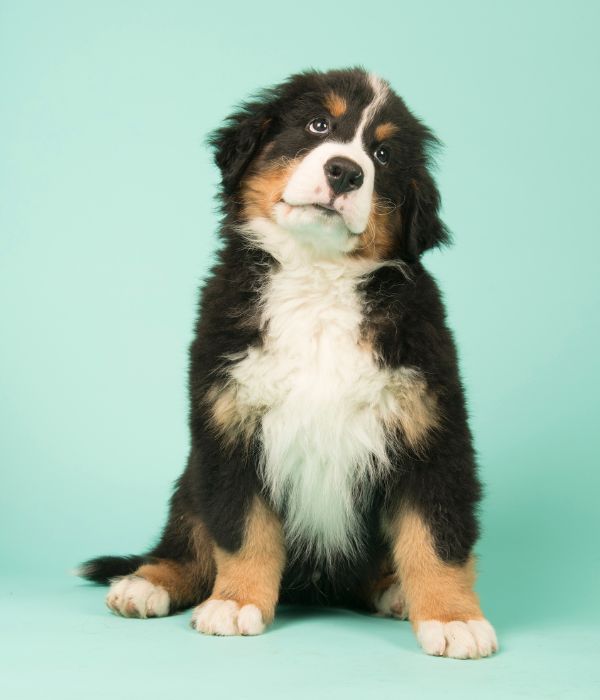
The Bernese is a Swiss farm dog, historically bred to protect livestock, pull carts, and guard property. That heritage matters. Berners are calm, loyal, and patient with children, but they also carry a mild guarding instinct. Some are reserved with strangers. Some will position themselves between their family and unfamiliar visitors. Some alert-bark.
None of that is aggression. But unchecked guarding instinct can shade into territorial or resource-guarding behavior in any dog that inherits it, including bernedoodles with more Bernese influence.
The Poodle
Poodles are water retrievers, not guard dogs. Highly intelligent, quick to train, eager to please. The relevant nuance for aggression: Poodles are emotionally sensitive, and they do poorly with harsh corrections. Punishment-based training can create fear-based aggression in a Poodle or Poodle mix where none existed before. That sensitivity carries through to bernedoodles.
What the Mix Usually Produces
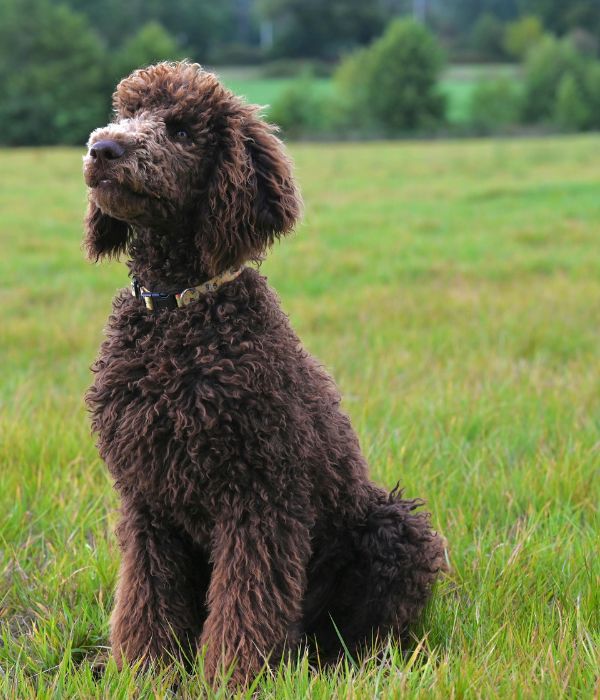
A dog that’s affectionate, socially confident, trainable, and loyal. Mild protectiveness from the Berner side. Sensitivity to handling and training style from the Poodle side. Not a guard dog. Not an aggressive dog. A family companion who wants to be wherever you are.
What Aggression Actually Means (And What It Doesn’t)
Owners often panic-label normal behavior as aggression. The distinction matters because the response to each is different.
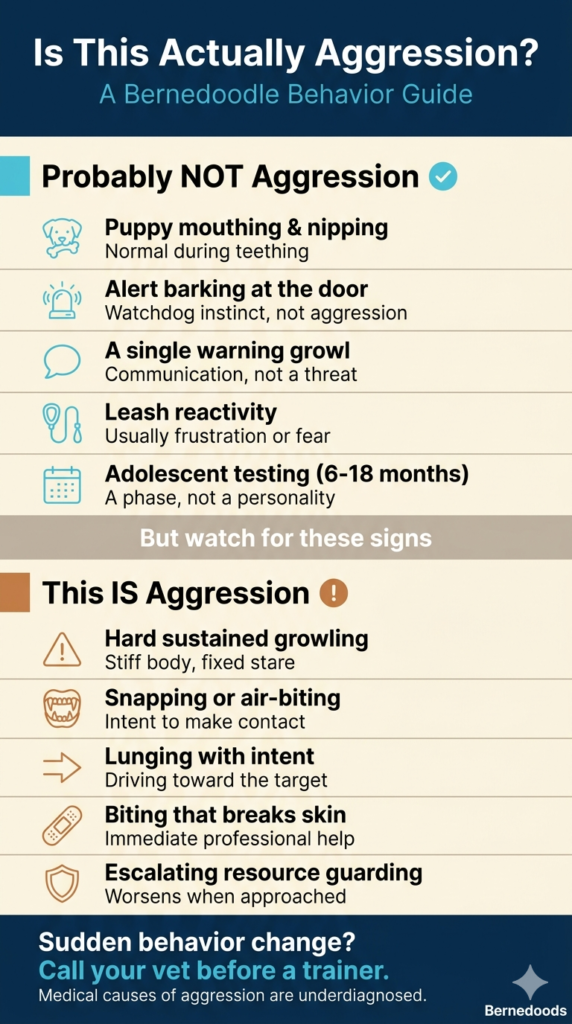
Not aggression:
- Puppy mouthing and nipping during teething
- Alert barking when someone knocks at the door
- A single warning growl with no follow-through
- Leash reactivity (usually frustration or fear, not aggression)
- Adolescent testing behaviors between six and eighteen months
Genuine aggression:
- Hard, sustained growling with a stiff body and fixed stare
- Snapping or air-biting
- Lunging with clear intent to make contact
- Biting that breaks skin
- Resource guarding that escalates when anyone approaches
One important note: at its core, growling is communication. A dog that growls is telling you something is wrong. Punishing the growl teaches the dog to skip the warning and go straight to the bite. The growl is the information you need.
Why a Bernedoodle Might Show Aggression
When aggression does show up in a bernedoodle, it’s almost always traceable to one of these causes.
1. Fear
This is the single most common cause of aggression in friendly breeds. A bernedoodle that feels cornered, overwhelmed, or threatened will growl, snap, or lunge as self-defense. Common triggers: unfamiliar people leaning over them, loud noises, unexpected grabs or hugs, a new dog charging into their space. Fear-based aggression is often mistaken for dominance or “meanness,” but the dog is scared, not mean.
2. Resource Guarding
Protecting food, toys, beds, or even a favorite person. This shows up repeatedly in real-owner conversations and it’s rooted in insecurity, not dominance. A dog that guards resources believes something they value is at risk. The fix involves trade-up training and building trust, not forcing the issue. Punishing resource guarding almost always makes it worse.
3. Pain or a Medical Issue
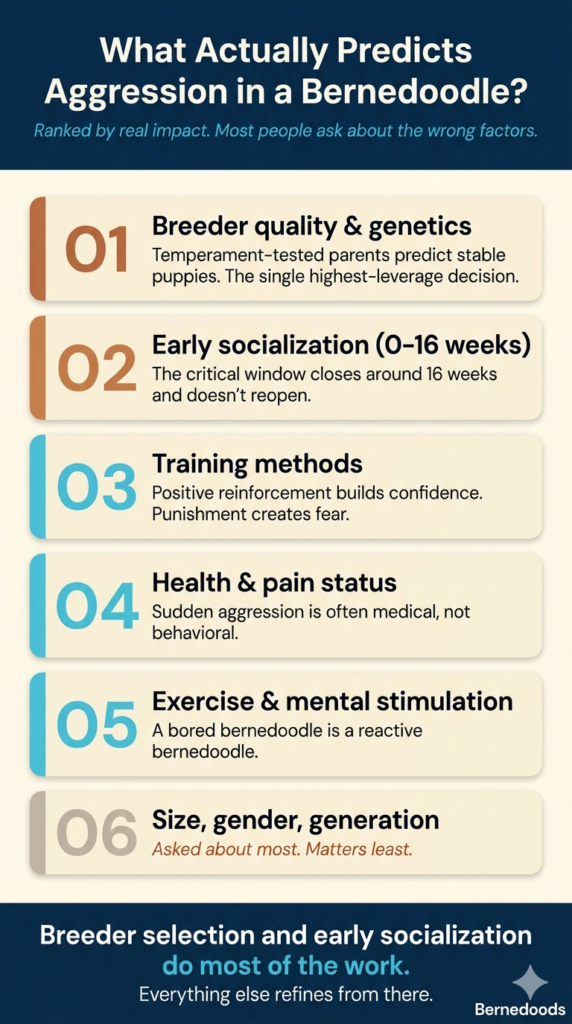
This cause is underdiscussed and critical. Sudden aggression (especially in a previously friendly dog) is frequently a medical problem before it’s a behavioral one. Hip dysplasia, ear infections, dental pain, thyroid issues, and even tumors can manifest as irritability, growling when touched, or snapping out of nowhere. A vet visit should be the first step for any new or sudden aggression, not a trainer.
4. Missed Socialization Window
The critical socialization period in puppies closes around fourteen to sixteen weeks. Puppies that don’t meet a wide variety of people, dogs, surfaces, sounds, and environments during that window often grow into fearful adults. And fearful adults are at higher risk of fear-based aggression. This window doesn’t reopen. What you do (or don’t do) in those first four months matters for the dog’s entire life.
Poor Breeding
Temperament is partly genetic. Bernedoodles from breeders who don’t temperament-test their parent dogs, breed anxious or reactive dogs, or separate puppies from the mother too early carry real behavioral risk. A reputable breeder who prioritizes temperament alongside health is one of the strongest predictors of a stable adult dog.
Harsh Training Methods
Both Bernese Mountain Dogs and Poodles are soft-tempered, sensitive breeds. Alpha rolls, scruffing, leash jerks, yelling, and dominance-based training create fear, and fear creates aggression. The modern veterinary behavior field is unanimous on this point: positive reinforcement works, and punishment backfires, especially in sensitive breeds. If anyone tells you to “show your bernedoodle who’s boss” through physical correction, find a different trainer.
Does Size, Gender, or Generation Affect Aggression in Bernedoodles?
These are the three questions owners ask most often. The research gives clear answers to some and honestly inconclusive answers to others.
Size: Yes, There’s a Real Effect
Smaller dogs carry measurably higher aggression risk. A 2021 University of Helsinki study of roughly 9,200 dogs found small body size was a statistically significant risk factor for aggressive behavior toward people, alongside fearfulness, older age, and being male.
A 2016 genome study in BMC Genomics went further and identified a genetic link: the same IGF1 gene variants that produce small body size are associated with owner-directed aggression, touch sensitivity, and stranger-directed fear.
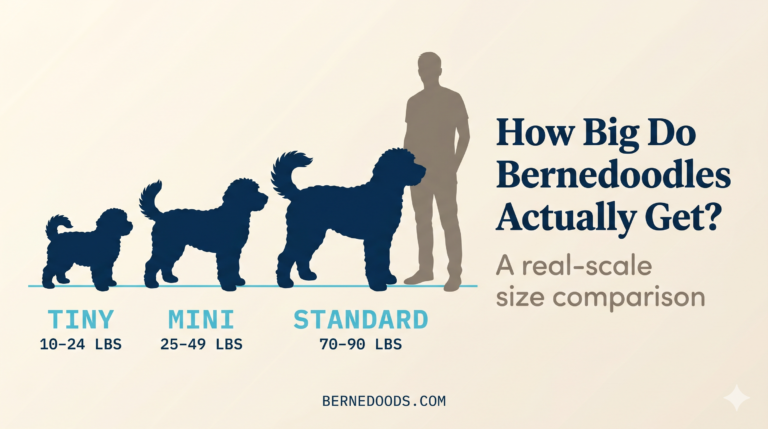
For bernedoodles, this means mini and micro sizes likely carry slightly higher aggression risk than standards. But the effect is moderated by the Bernese side, which is a large, gentle breed.
And much of the small-dog aggression difference comes from how owners treat small dogs: less formal training, more leniency, carrying them instead of walking them, skipping socialization because “they’re small enough to manage.”
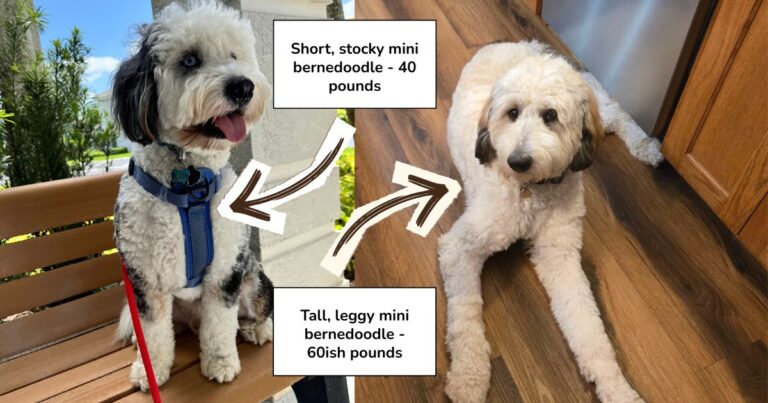
Mini bernedoodle owners should train more, not less. Size shouldn’t steer you away from a mini, but it should steer you toward taking training and socialization seriously from day one. See our for a full size comparison.
Gender: Slightly Higher Risk in Males, but Modest
Male dogs show higher odds of aggression in multiple large studies, including the Helsinki research. The effect is real but modest. Individual temperament, training, and socialization matter far more than sex, and no one should choose or reject a bernedoodle based on gender alone.
The more interesting question is intact versus neutered, and the answer has shifted. For decades, the standard advice was to neuter male dogs to reduce aggression.
Current veterinary guidance is more nuanced. VCA Animal Hospitals now states that neutering can exacerbate some types of aggression, particularly fear-based aggression, because testosterone supports confidence and stable responses to threats.
Neutering does reduce hormonally-driven aggression (intermale conflict, mating competition) by roughly 25 to 30 percent in relevant studies, but it’s not a blanket fix for every aggressive behavior.
Timing also matters. Early neutering before physical and emotional maturity is associated with increased anxiety and noise sensitivity in some dogs.
The practical takeaway: don’t neuter hoping it’ll solve aggression. Talk to a veterinary behaviorist about the specific type of aggression you’re seeing, and make the decision based on the individual dog.
Generation: No Meaningful Effect on Aggression
F1, F1B, F2, multi-gen: these labels matter for coat type and shedding, not aggression. There’s no credible evidence that any bernedoodle generation is more or less prone to aggression than another. Breeder quality and early socialization dwarf generation as predictors of temperament.
The one caveat worth noting: bernedoodles with more Poodle genetics (F1BB, for example) may trend slightly more energetic and alert, while more Bernese influence may trend slightly calmer and more reserved. Neither correlates with aggression.
How Bernedoodles Compare to Other Breeds
Compared to other doodles (goldendoodles, labradoodles, sheepadoodles), bernedoodles rank similarly low on aggression.
All are friendly family mixes bred from friendly parent breeds. Compared to their purebred parents, bernedoodles inherit the temperament strengths of both: the Berner’s gentle loyalty and the Poodle’s social confidence.
Compared to breeds commonly flagged as higher-risk for aggression (certain terriers, some guarding breeds, some herding breeds), bernedoodles sit on the opposite end of the spectrum.
None of this means every bernedoodle is safe with every situation. It means the breed itself starts from a gentle baseline.
What Reduces the Risk of Aggression in a Bernedoodle
Six decisions, in rough order of impact.
When to Get Professional Help
Three tiers of professional support, in rough order of severity.
Don’t wait. Aggression rarely resolves on its own, and the earlier it’s addressed, the easier it is to change.
The Bottom Line
Bernedoodles are not aggressive dogs. They’re one of the most gentle, affectionate family companions you can choose, and the breed-level data backs that up. The handful of cases where aggression does show up almost always trace to fear, pain, poor breeding, missed socialization, or harsh training. Not the breed itself.
If you’re researching bernedoodles as a potential family dog, aggression shouldn’t be on your list of concerns.
If you’re already an owner dealing with aggression in a bernedoodle you love, don’t panic and don’t give up. Start with a vet visit, find a positive-reinforcement trainer, and address the underlying cause rather than the symptom.
Related Posts
-
Are Bernedoodles Hypoallergenic?
No dog is 100% hypoallergenic, and bernedoodles are no exception. But most bernedoodles are a strong option for allergy sufferers,…
-
Do Bernedoodles Bark a Lot? An Honest Look at Noise Levels
You’re researching bernedoodles and you want to know what your neighbors are in for. Fair question. Barking is one of…
-
Furnished vs. Unfurnished Bernedoodles: What’s the Difference?
A furnished bernedoodle has the shaggy, bearded face that gives doodles their teddy-bear look. An unfurnished bernedoodle has a smoother,…
-
When Do Bernedoodles Calm Down? (Asking For A Friend)
If you’re reading this at 10pm after your bernedoodle ricocheted off the couch, stole something important, and is currently staring…
-
Are Bernedoodles Clingy? Let’s Talk Separation Anxiety & Neediness
If you’re searching this, your bernedoodle is probably sitting on your foot right now. Or staring at you from across…
-
How Big Do Mini Bernedoodles Get?
If you’re here, you probably fall into one of two camps. You’re either shopping for a mini bernedoodle and trying…